One day I was greeted at the front door of our India monastery by a strange sight at my feet. What appeared to be an insect was moving very strangely across the ground.
As I looked closer it seemed to be a small leaf or seed that had legs! It would move straight ahead for a bit, then turn and move sideways, like a crab, always making steady progress, but unlike any living creature I had ever seen. What was this strange thing?
I finally noticed that there were 6-7 ants working in perfect harmony to carry a seed to their home. No single ant could have possibly have done this on its own.
I marveled at the seamless cooperation they showed. How was this possible? Nobody seemed to be in charge or giving orders.
Then I reflected that our new monastery, with seven monks, demonstrates the same type of effortless harmony and cooperation.
In June of 2018 we launched a new type of monastery, based entirely on what Swami Kriyananda had long wanted for his monks. A life that was inwardly focused, with very regular group meditations every day, meals in silence, and strong support for an interior life focused on God. At the same time we have a very active life of service to others.
We might have a bit less time in the day for service, compared to a life without meditation. But I’ve seen that this same group has accomplished far more in the last year than we were able to do previously, even when we had more hours of the day dedicated to projects.
Just like with the ants, one might ask, “how was this possible?” We’ve seen that when a group of people meditates together three times a day, as we do, there develops an unusual harmony and attunement with each other. We also work on a practice that Swami Kriyananda called “ego-transcendence,” which further helps to dissolve any sense of competitiveness and separation from others.
Swami Kriyananda said about his Guru, Paramhansa Yogananda:
“He would put everything aside to chant or meditate until his mind was firmly rooted in God. Only then would he return to his work. That is how he was able to accomplish such tremendous things in his life. He never acted from ego-consciousness. Man’s power is limited, but God’s is without limitation.”
A group of people working together in seamless harmony can accomplish so much more than individuals doing their own thing. This is easier said than done! But with hundreds of hours of group meditation that we’ve had during the last year, along with the practice of ego-transcendence, it has become as easy and natural as what I observed in those ants.
You don’t have to live in a monastery to practice this. If you can meditate regularly with some of your co-workers, with your friends, or at an Ananda centre, you will find a growing harmony and friendship with them and with all souls.
People often ask what they can do to bring peace and harmony into this world. Answers are often right in front of us. Even the simple ant can do this. Can we humans not do the same?
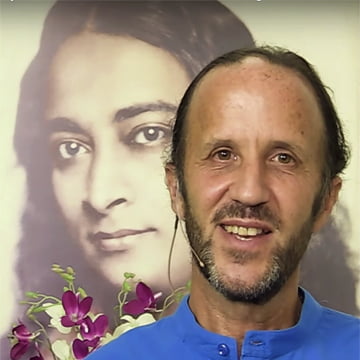
Nayaswami Devarshi
Nayaswami Devarshi has been with Swami Kriyananda and Ananda Sangha since 1977. He is director of the Ananda Monastery in India and head of Ananda Kriya Sangha worldwide.











5 Comments
Totally ego ripping as usual Devarshi! Shredded bare with no where to hide!
I would like to receive notices of the times we can meditate/pray together. I had calendered at 5pm a meditation, Ananda. However went back to find a link. There is no notice. I scrolled my email to find The meditation. I could not find it, however i did read this and since u asked for comments, it is thus my suggestion that if you want us to join you, we must have the link accessible, even if it goes out that morning. I would love to get the chance to meditate with you all. Zoom, u tube…..anywhere. Thank you for your service, Pranava
Intriguing. A remarkable testament of the spiritual life. …Is it permitted to share something from another source? The following showed up in my mailbox today. I thought it nearly as much an affirmation as what you’ve written here, Nayaswami Devarshi.
Dr. Wolfgang Smith of The Philos-Sophia Initiative Foundation on something C.G. Jung wrote: “Jung on the spiritual despair of Freudian psychology…”
Whatever may be the ultimate nature of “this something” that is called spirit, it is the crucial factor which enables us to transcend the recurrent exigencies of animal life and enter upon the fullness of human existence. “If this is not achieved,” Jung warns, “a vicious circle is set up, and this is in fact the menace which Freudian psychology appears to offer.” The way of Freud does not lead beyond the tyranny of instinctual drives, “this hopelessness,” as Jung calls it. “Wretched man that I am,” he exclaims, quoting the words of St. Paul, “who will deliver me from the body of this death?” And his answer to this perennial question is simple enough: “There is nothing that can free us from this bondage except the opposite urge of life, the spirit. It is not the children of the flesh, but the ‘children of God’ who know freedom.”
—Excerpt from Cosmos & Transcendence
I’m curious about the life of your monks at the monastery in India. How does one become a monk and what does monastic life look like? I’ve been pondering these thoughts for years and they don’t go away. I feel drawn to some level of spiritual study and discipline, as well as to a life of service. Thank you for your time in responding to my inquiry.
Namaste
Michael Brott
How may a person know more about the monk life? Especially at Ananda
Thank you